
Trimont native goes from C’s to professorship award
Vrieze has focus on addiction and mental health
Trending
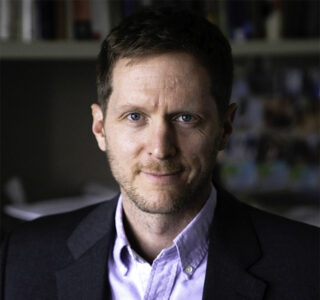
TRIMONT - Trimont native, University of Minnesota Professor and Clinical Psychologist Scott Vrieze has been recognized with a Distinguished McKnight University Professorship.
The award is given to outstanding faculty members who achieve full professor status. For Vrieze, it all started on a farm just outside of Trimont.
"A hog farm, I raised hogs as a kid," he said. "I did 4-H and FFA. My dad worked for Minnesota West Technical College, but he was also a farmer. My mom was a librarian."
Vrieze attended the University of Minnesota after high school, through a different system than what exists today.
"I was actually a terrible student," he said. "I had a C average, but I knew that I wanted to go to college. I applied to one college, and that was the University of Minnesota. Back then, there was a remedial college, explicitly for students they didn’t think were ready for college. I had no idea. I just thought I was applying to the University of Minnesota."
After completing remedial courses, Vrieze first gained interest in Psychology during his time as a student at the U of M. He then graduated and made his way to southern Minnesota for a few more years.
"I floundered around for a couple of years doing temp jobs," Vrieze said. "I went back to Trimont and dug ditches for Carlson Drainage for a couple months, just doing odd stuff. Eventually, I started working for the Hennepin County court system and the juvenile court system."
It was working for the system that he found his first psychological pursuit, understanding why kids committed crimes, entered the system and couldn't turn it around to find redemption. It was this pursuit that got him back in the U of M.
"I cold-called professors like, 'Hey, I’m really interested in psychology. I’m interested in what you do. Is there anything I can do in your lab?'" Vrieze said. "'I've got a full-time job, but I’ll volunteer, I’ll work nights, I’ll work weekends, whatever.' Somebody responded by email and said, 'Yeah, sure, I've got a project for you.' That’s how I got into graduate school at the University of Minnesota."
Now, Vrieze has over 180 articles he has worked on, and has been cited over 25,000 times according to Google Scholar. Since graduate school, Vrieze has worked on addiction and mental illness. He said he found some people he enjoyed working with, the material was interesting and it has all taken off ever since. As for what has kept him in this area of research, Vrieze said it's the problems.
"It’s having a problem in front of you and trying to figure out how to solve it," he said. "You don’t know why. You don’t know how something works, so you don’t know why some people develop substance use problems or why some people become depressed. You’ve got a question, and then, how can you possibly answer it?"
Additionally, Vrieze said continuing to research a topic like this can have massive benefits for affected people at large.
"If you can contribute to our understanding of why some people develop those problems, and you know why some people don’t, it’s going to have a huge public health impact," he said. "You’re going to be able to help people, people who are struggling and people who are suffering. That’s an important reason to stay with it."
As a professor, Vrieze teaches about mental illness, mental health and the causes and consequences of mental health problems, substance use and addiction. Through being a professor, Vrieze said he has learned the importance of academic independence and freedom.
"The classroom and the university can be a place where all kinds of ideas can be expressed without fear or favor," he said. "How crucial that is to learning, dialogue and dealing with ideas that you haven’t thought of before. Having to defend and justify your own ideas. Test people; test how they think about the world."
To have received the Distinguished McKnight University Professorship, Vrieze said it is simply an honor.
"A bunch of people that I respect nominated me," he said. "They wrote nomination materials. There was some committee at the university who reviewed all the materials. It’s a real honor. These kinds of things always are."
As an educator, Vrieze said he is becoming more interested in undergraduate teaching.
"There’s a lot of concern in higher education about things like grade inflation and the meaning of a university credential as being looked down on or not held in very high esteem by large numbers of Americans," he said. "I think that’s really unfortunate. I don’t think a university education is what everyone needs to get, but it can be valuable. I want to contribute to higher education in a way where people start to see it as rigorous."
In addition, Vrieze said he wants to see more kids from Martin County have the opportunities necessary to go to the U of M.
On the research side, Vrieze said he is looking to continue working at what he has dedicated himself to.
"Trying to answer those scientific questions about the causes and consequences of mental health and substance use," he said. "One thing we do is we’re increasingly creating national and international networks of scientists and data from participants to try to do better science that’s going to get us better answers and more answers for more people in the U.S. and around the world."