
Local farmer elected to MN Soybean board
“The main objective here is to get us more profitable.” — Lawrence Sukalski
Trending
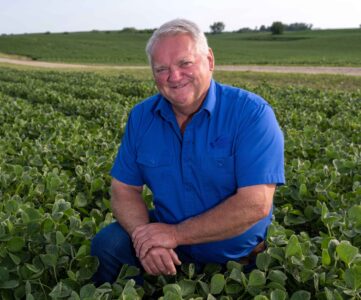
FAIRMONT - Martin County Farmer Lawrence Sukalski has been elected to replace Rochelle Krusemark after 12 years as District 8's representative on the Minnesota Soybean Research and Promotion Council (MSRPC), covering an area including Martin and Faribault counties.
Sukalski has been involved in soybean advocacy for nearly two decades. First, he served nine years with the American Soybean Association. Then, nine years ago, he was elected to the United Soybean Board, where he has also served three three-year terms. In the last few years, Sukalski has served on USB's Value Alignment Committee.
"They’re the ones who decide where the pools of money go in each," he said. "We’ve got seven buckets, and we decide which bucket gets more. We look at the last couple of years, at moving the pile. We got too many soybeans, so we’ve been focused on using them up, shipping them out through exports, new uses, just trying to get that price back up there, so they’re profitable again."
From his work there, Sukalski said his biggest takeaways surround renewable fuels.
"I was the person from the United States Soybean Board to be on the National Biodiesel Board," he said. "They switched their name to Clean Fuels Alliance of America. Over the years, we’ve seen some mandates, more uses, people trying to be more sustainable, looking at their carbon footprint. We’ve seen a lot more usage of renewable fuels, and that’s going to be one of our ways of getting profitable again."
Through the USB, he would also attend MSRPC meetings. Having this experience has given Sukalski plenty of connections and experience before his term begins July 1.
"I know their committee structure," he said. "I know the ideas that they have about sustainability and moving a pile."
Every time there is an election, Sukalski said there is a committee that reaches out to potential candidates. After hearing radio ads and other calls for candidates, Sukalski decided to throw his hat in the ring.
"I’ve learned a lot in my last 18 years, and especially the last nine years," he said. "I thought, well, this would be a good way to bring it back to Minnesota and practice some of the things we do on the national board to the Minnesota Board."
In the months leading up to the election, Sukalski made it a point to reach out and discuss issues with area representatives.
"I tried to communicate with people we’ve got in district eight," he said. "We’ve got several counties. I reached out to their presidents and told them my wishes were to be on the board and ask for their votes. I also sent letters out to the people who were going to get a ballot, telling them my experience and why I wanted to serve. Everything clicked and I got elected."
After traveling across the region to meet with people and discuss his soybean plan, Sukalski said it was a relief to learn he had won the election.
"Whenever you put effort into something, you want to get the fruits of it," he said. "It was a relief. I look forward to working with these other farmers and trying to get us more profitable."
Looking around at the current situation, Sukalski said he is seeing fewer farmers and less outstate Minnesota representation.
"There’s people in Washington and St. Paul that have their ideas on what farms should be like," he said. "They know very little about it. What we have to do is be proactive and figure out how we can help the lobbying organizations with projects for proving that we are sustainable and we don’t need all these rules and regulations that make it burdensome and us uncompetitive in this world."
Before he gets started, Sukalski said his main goal with the MSRPC is to benefit soybeans as much as he can.
"I certainly don’t want to run the place," he said. "I don’t want to create havoc. I just want to help use my ideas and experience to try to provoke other ideas. The main objective here is to get us more profitable. Move the pile of soybeans."