Changes likely to George Lake Dam
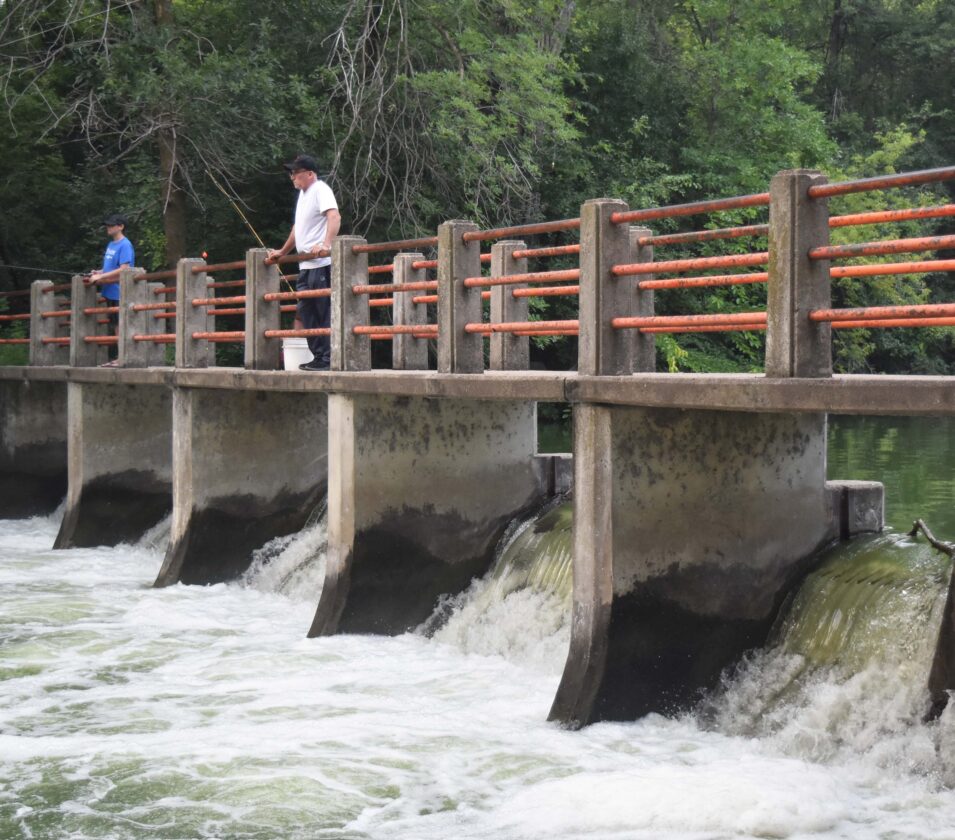
ABOVE: The George Lake Dam in Fairmont. The Fairmont City Council is discussing potential changes to the dam.
FAIRMONT– The George Lake Dam has been discussed several times this year by the city of Fairmont and its city council as aging infrastructure, water levels and recent fish kills have been brought up.
Back in April, Water Resources Coordinator, Hannah Neusch, had first presented the council with the possibility of removing the dam.
She told council that according to the Department of Natural Resources (DNR), the dam was built in 1939 which makes it 86 years old. As with any aging infrastructure, the city plans to investigate the dam to see if repairs need to be made and how much those repairs would cost.
“At the same time, the city has also been working closely with the DNR to determine the feasibility of removing or altering the dam and installing a series of rock rapids,” Neusch had said.
Rock rapids are alternative structures that function as a dam and can allow for improved fish passage and enhanced habitat for aquatic species.
At that time she told the council that a survey had been done by the DNR which said the area was suitable for rock rapids and asked for council approval to continue researching and gathering materials.
As for the dam itself, it’s subject to routine inspection and was last evaluated in the summer of 2022 and the condition was deemed satisfactory at the time of that assessment.
Still, the dam, like most others in the country, is old. In fact, according to the National Inventory of Dams, the average dam age is 64 years, so the city is looking at doing an additional, full underwater inspection to check for signs of aging infrastructure.
“With climate change and shifting weather patterns, there are more torrential rain events. You’re getting a lot more rain and you’re getting it in a shorter period of time,” Neusch said. “The watershed where these lakes or rivers are, the infrastructure wasn’t built for it and the infrastructure is aging.”
There is also the issue of mass fish kills, the most recent of which was late summer of last year that left hundreds of fish behind the dam dead.
Neusch explained that the water comes over the dam, and the water on the other side is already high so fish don’t see concern with going over the dam. However, when the water inevitably recedes and cuts off the fish’s “escape route” back to the lake, it leaves the fish stuck.
“It becomes deoxygenated and they die and you have hundreds of dead fish,” Neusch said.
She said this is common after heavy rain and that a fish kill is common after flooding, but that the fish need a way to get back into the lake.
With a rock rapid, Nesuch said the water elevation is more gradual and that there’s space for pools in between.
“The water can gradually move down. It also allows for water to escape a little faster,” Neusch said. “A fish can swim down during high flow and during low flow, if a fish is motivated to get back into the lake, it can.”
Back in April during her presentation to council, she also shared that rock rapids can create an additional habitat for aquatic insects and new areas of ecosystems for organisms to live in.
Neusch said she has been in conversation with an area hydrologist with the DNR so they can talk about the pathways to do it, but that there’s no engineered drawing or cost estimate for the potential project yet.
More recently, on Monday of this week, Council Member Britney Kawecki brought the topic up as a discussion item and said she wanted to consider removing the boards– wooden planks in the dam that are set at a level to ensure that lake levels stay– at the dam. She said it had been welded shut in the 90s and that the water levels have been higher since then.
Kawecki said that unwelding the boards will be a low cost solution to manage the lake levels and reduce the shoreline erosion and any resulting property damage. She said she strongly feels like it’s something the city should consider looking at this fall.
This suggestion was met with some mixed response from the rest of the council as Jay Maynard said he’d like to see cost estimates for it and Randy Lubenow said he’d like to see photos from residents who have experienced property damage from high water levels. Wayne Hasek said he’d like to leave the dam as it is and James Kotewa said he was curious as to if there would be any health benefits to the change.
Council ended the discussion on Monday with plans to revisit the topic at a later meeting.
The way Neusch said she sees it, there are three options: the inspection happens and repairs are made if needed, but the dam stays in place, or the inspection happens and the council opts to install rock rapids, or the water control structure will be altered.
She also noted that there are grants available for installing rock rapids and also grants available for repairing the dam if needed.
“It really depends on council and how they see the community in the future,” Neusch said.
The George Lake Dam will be discussed further at the Lakes Management Committee meeting on Aug. 6 as two items pertaining to it are on the agenda, including the water control system and the rock rapids option.
Local News

County gets $300,000 of bonding bill for building remodel

Heaven’s Table receives multiple grants as summer approaches
Filing opens today in Martin County
FAIRMONT— The filing period opens at 8 a.m. today for federal, state and county offices and it will remain open ...

Lake Belt cornhole tournament on May 23

After flight class, FHS students pursue aviation