
Fairmont helps alleviate blood shortage
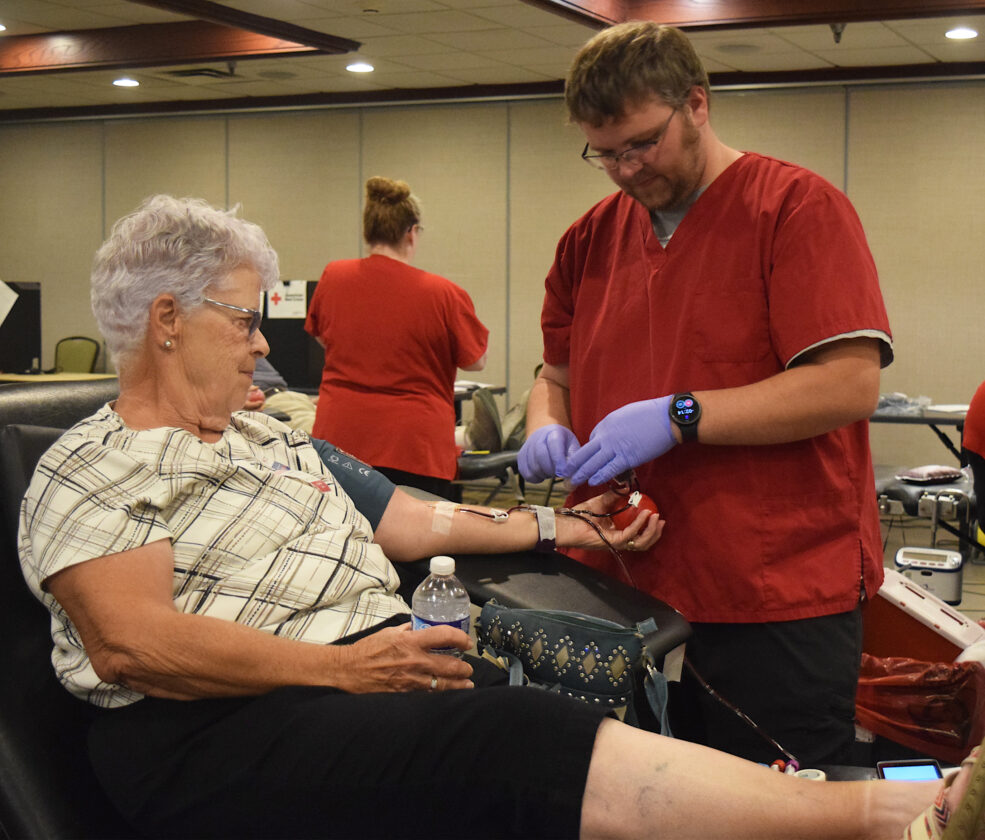
ABOVE: Judy Post donates one pint of blood from her left arm as nurse Blake Mathiason instructs her to move her hand to keep the removing blood flowing on Tuesday afternoon at Best Western’s grand hall. American Red Cross will also be at the Best Western today, Wednesday, Sept. 4 from noon to 6:00 pm.
FAIRMONT — In a hospital that is filled bed-to-bed with patients, a doctor shouldn’t have to discover there isn’t enough blood to treat them all. Unfortunately, this may already be the case in several locations. Blood drives across the nation operate several donation appointments a day to make sure that there is enough blood or plasma for hospital patients who need it the most.
Currently, Fairmont is in the process of helping those humans around the country in need of blood, as the blood drives need more help than ever. Fairmont will be having a blood drive today, September 4th, from noon to 6 pm at the Best Western Hotel. Donation appointments may be made on same-day notice at the official American Red Cross website. By donating blood, the American Red Cross offers an assortment of donor benefits including prizes, swag, gift cards, sweepstakes and more.
According to the American Red Cross, the national non-profit organization for blood donations and disaster relief, the United States has faced a significant lack of donations. This previous January, the Red Cross urgently declared an emergency blood shortage, with reports of having the lowest amount of blood for the first time in more than 20 years. The organization made this announcement and reached out to donors– experienced or new–to sign up for a time slot at their local blood drives to ease the dangerous low amount of blood for disaster relief patients.
During that month, the organization was forced to limit distributions of some of the most transfused blood types to hospitals. The number of people donating blood through the Red Cross annually has notably plunged 40 percent. In more recent discussion, American Red Cross recently submitted a blood shortage appeal on August 4.
“When fewer people donate blood, disruptions to the nation’s supply are harder to overcome, especially when compounded by factors like dangerous weather, heat and summer travel,” said Sue Thesenga, the Regional Communications Manager for the Minnesota, North Dakota, and South Dakota regions.
She confirmed that blood is an important necessity this year, and the shortage has already affected patients across the country due to the dangerously low number of blood donations made within the past few years.
“[The American Red Cross] is still facing an emergency blood shortage as the national blood supply has fallen more than 25 percent since July 1,” Thesenga reported, emphasizing the importance that those who donate blood save someone’s life in a hospital operation.
Many blood drives that occur in the nation are started by volunteers and partners with the American Red Cross. From there, coordinators can organize workers and medical equipment in preparation for the arrival of donors at the selected location.
With the warm, summer months, weather prevented more than 18,000 drives from occurring in their planned locations, removing the potential for donation bags to pour into the amount of collected blood donations. With the addition of no students in school, blood drives were not held in schools to grab the attentions of faculty, families and students themselves. As school is beginning to return, the American Red Cross hopes that school-located drives will begin once more.
In other situations, potential and qualified donors feel reluctant to donate out of intimidation for the needles, the process, the sight of blood, the outcome and plenty of other reasons that hold them back from attending a blood drive donation appointment. Luckily, the staff, with their expertise and training, will be able to guide donors safely and comfortably to make sure the donation process runs as smoothly as possible.
“Our trained phlebotomist will help first-time donors through the process. Bring a friend for morale support or think about something that makes you happy as a distraction. You will leave knowing you made a meaningful impact,” Thesenga said.
In addition, workers for the blood drive determine a final goal based on the history and average outcome that the previous blood drive (in that specific location) had received before.
To determine their numbers, The American Red Cross also has what is known as a ‘blood inventory’, which is a recorded collection of blood that fluctuates statistically as blood is taken from donors and then distributed to be used in a patient’s blood transfusion operations. Despite several amounts of blood arriving from each completed and well-attended blood drive, much of this blood is taken quickly to treat said patients, thus resuming the plateau of a blood shortage and leaving the American Red Cross fights to once more raise awareness about donations and encourage communities to participate.
“The American Red Cross is dedicated to educating blood drive sponsors, current donors, and individuals who have never donated blood or haven’t done so in a while about the continuous need for blood,” said Thesenga.
To be eligible to donate, the donor will be asked a series of questions concerning the history of their health. One of these most notable restrictions includes certain prescription drugs, new piercings made on the body, HIV and the use of narcotics. Currently, the most demanded blood type is O. Because of blood type O’s scarcity in donations, hospitals haven’t been able to receive the amount they require within recent weeks. Donors (especially those with an O blood type) are crucially needed now, according to Thesenga. The Red Cross is contacting donors by phone, email, text and app, moving their focus to the emergency blood shortage.
“To make the donation process even faster also recommend that donors complete a RapidPass. With RapidPass, donors complete the pre-donation reading and health history questionnaire online, on the day of donation, before arriving at the blood drive,” Thesenga said. “It’s important to remember that blood is perishable and cannot be stockpiled in advance, but the Red Cross blood supply can be replenished when generous volunteers roll up a sleeve to give.”
Local News

Art Mart makes return

America 250: The National Road connected a young nation

After 44 fulfilling years, Sandhurst retires from SJV

Area blood drives planned in June
Fairmont all clear on water report
MCW hears construction report
SHERBURN — The Martin County West School Board had a meeting Monday evening and received an update on the ...