
Tires a must as winter approaches
Trending
FAIRMONT - As the weather cools and winter approaches, monitoring and properly caring for tires are vital to car safety.
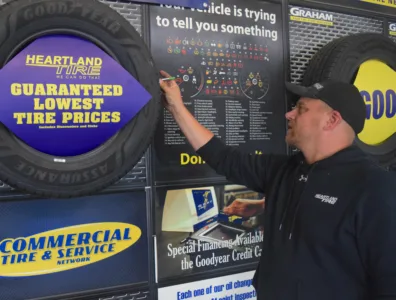
Heartland Tire Manager Adam Leschefske said the most common issue people come in for is flat tires.
"Flat tire repair is always a big one, pretty common," he said. "Alignment issues. Some of our roads aren’t the best. That’s pretty common."
Regarding colder weather specifically, Leschefske said air pressure is an issue that becomes more prevalent.
"The hot and cold does affect air pressure in the tires," he said. "For every 10 degrees up or down, you can either gain or lose a pound in your tire. Stuff gets cold; rubber gets harder. Sometimes some of the rims that have corrosion on them tend to leak more in the winter time than they do in the summer. Valve stems get hard. You tend to have a little bit more of that coming into cold weather."
As for when tires should be replaced, Leschefske said there is a factor.
"There’s wear indicators on the tire that come through that are more prevalent when they get worn out," he said. "Tread depth is more or less what it is. Usually the legal replacement on the cars is for 4/32nds [of an inch]; you want to start looking for new tires, especially going into winter. If you’re half tread, that’s one thing, but if you’re below that, you might have a little harder time getting around when it’s really snowing and icy roads."
The physical indicator is the main piece, as there are not really any time-based indicators, given different driving habits.
"You got guys that run on the interstate," Leschefske said. "They go to Sioux Falls, they drive to cities. They’re on the interstate all the time. That’s different than a guy that’s a farmer that’s running around gravel roads all day. It’s a lot of application, based on what they’re doing."
If people are not sure, Leschefske said Heartland Tire is able to check for people.
"They can just stop in," he said. "I did it twice today. Somebody comes up, 'Can you take a look at my tires?' It’s just a matter of us going out there, taking a look at them, what the condition is, and give them an honest opinion."
It's not just tires themselves that can cause issues, but other car components that cause tire issues as well.
"Loose front end parts," Leschefske said. "If it’s your vehicle wandering down the road a little bit, you have to steer it more to stay in the lane, that sort of thing. That could be tire rods, struts making noise, or something like that. That could be a wear indicator, too, where it’ll knock the alignment off, and you’ll start noticing some edge wear and hearing your tires more. They’ll be louder because they’re chopped."
One thing that has changed, depending on how often people get their regular oil changes, is tire rotation intervals.
"Nowadays, a lot of these vehicles are going about 5,000-mile oil change intervals as opposed to 3,000," Leschefske said. "Years ago it was every other oil change. Now it’s about every oil change. In that 5,000-6,000 mile range is a good interval to rotate."
While it also varies depending on driving factors, Leschefske said once a year is a good interval for alignments. Ignoring either rotations or alignments wears down tires faster, which Leschefske said can dive into people's pockets more than it needs to.
"We can look at the tires and see, 'I think we better do an alignment before it gets too bad,'" he said. "You can wear out a set of tires in a pretty quick hurry."
Overall, Leschefske said the main thing people should do before winter starts is go to a shop and get their tires checked to see if there are any issues with the current tires, adjustments that could extend tire life, or if they need new tires.