
DNR completes second round of stocking
Trending
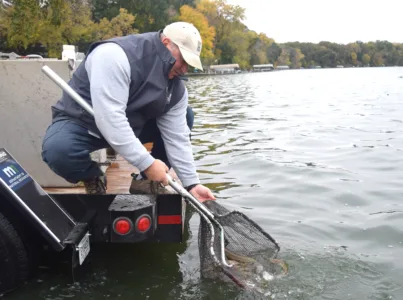
FAIRMONT - After the walleye fry were stocked in the spring, the Minnesota Department of Natural Resources (DNR) came on Wednesday to stock the Fairmont Chain of Lakes and Fox Lake in Sherburn with muskie.
The day is almost two years to the day from when the DNR last came to stock muskie. Area Supervisor Ryan Doorenbos said this cycle is the normal rotation they do in Minnesota with muskie management.
"It’s mimicking what you would see in a natural system where you have natural reproduction," he said.
As for why muskie, Doorenbos said it is trophy management of a species that does not reproduce naturally in the current lake system.
"Because they don't reproduce naturally in the system, if we want to maintain a population, we have to stock them every year," he said. "They usually raise these at the hatchery in Waterville, and they have drainable ponds they use. It's not just Fairmont lakes; other muskie lakes get stocked, too."
Bright and early Wednesday morning, the fish were ready, and the transport process began.
"After they’re draining the ponds at the Waterville hatchery, they’ll actually put them in raceways within the hatchery," Doorenbos said. "We showed up this morning, anesthetized the fish and put passive integrated transponder tags into each of these fish. PIT tags are put into muskies primarily for following growth rate reasons and seeing what years they were stocked and what size they were stocked at so we can find out if bigger fish survive better than these smaller fish that you stock in that particular year."
This year, a slightly different approach is being taken, as alongside 160 fingerlings, they will also be stocking 30 yearlings.
"It reduces the number of fingerlings we have to stock," Doorenbos said. "What we found over time and the research is showing is these yearlings have even better survival than fingerlings, so we don’t have to stock as many and get similar results in terms of survival. Fingerlings are going to be 10 to 11 inches on average, and the yearlings that we stock are going to be more like 16 inches."
From the tags and reports from local contacts and anglers, Doorenbos said they are seeing up to 47-inch muskies from the Fairmont chain, which he said is good growth.
"They seem to be assimilating nicely into the fish community," he said. "They’re an additional predator on yellow bass and as well as freshwater drum sheepshead. They’re opportunistic in general, but either way it’s a unique angling experience for people that want to fish for muskies and potentially catch a fish of a lifetime, a trophy-sized fish. In the end, they’re working nicely in the Fairmont chain, and I think it’s been a success up to this point."
From here, Doorenbos said they will look at their timeline of all the lakes they evaluate and go from there.
"Our evaluations are on a rotation," he said. "A lot of lakes are once every four years, sometimes five years. We might interject a special assessment just for muskies just in case, but it’s a continuous process of looking at them."