
Peer support group gets statewide recognition
Trending
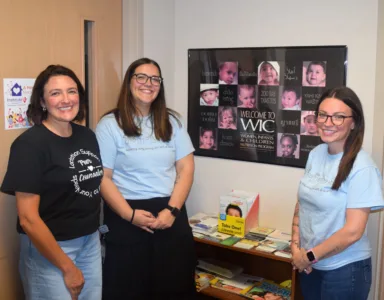
FAIRMONT - The Women, Infants and Children (WIC) breastfeeding support group, done within Faribault and Martin County Health and Human Services, was one of only three groups in the state to receive a Premiere-level Award from the United States Department of Agriculture (USDA).
Family Health Supervisor Alyssa Johnson said the group was first formed in 2022.
"There was an additional grant opportunity through the state funding to expand our WIC services, which is to have the WIC peer program come in, and that was back in 22, I think 2022. Okay. So we’ve been around since then, and every year we resubmit a funding application, and then we’ve been funded since then."
The group consists of a Peer Coordinator and International Board Certified Lactation Consultant, Rebecca Sokoloski, and two WIC Peer Breastfeeding Counselors and Certified Lactation Specialists, Samantha Werre and Brookelyn Kolander.
"The peer breastfeeding program connects local moms who are breastfeeding with a one-on-one support person," Werre said. "That's us. It’s nice because we work outside of regular office hours, so we’re available by text or phone on weekends for breastfeeding questions or to meet in person, and we stay with our clients from pregnancy all the way up through one year."
Currently, there are around 80 participants in the program, who work with either Werre or Kolander. Sokoloski coordinates which counselor goes to a particular mother.
"Warre knows conversational Spanish, so she gets more of our Spanish speakers," Sokoloski said. "After that, it’s who I think would fit best with each participant."
The connection first starts when moms on WIC go in for their first appointment.
"We have questions, a whole thing we go through for their certifications," Sokoloski said. "We ask how they plan on feeding baby, or if they’ve thought about how they want to feed baby once they’re here. If they say they’re interested in breastfeeding, we talk a little bit about our peer program."
"The state has guidelines for how often we should be reaching out and at what age," Werre said. "We have a schedule that we follow once a month throughout pregnancy, and then a little bit more frequently closer to their delivery date, and in the weeks immediately after birth."
The most common concerns or issues raised by mothers include how they'll be able to handle everything surrounding it and being able to continue doing it when they go back to work or school, Kolander said.
"Sometimes we have clients who don’t have a place at work to pump or don’t know how to approach that with their employer," Werre said. "We can help them with that. I would also say, especially in the early weeks, just getting started. Especially first-time moms, you’re learning something new."
As for the importance of a program like this in this area, Werre said access to services in general can be really challenging in rural areas.
"Especially for the clients that we work with, it’s awesome to be able to meet them where they are and help them get support they probably otherwise wouldn’t be able to get," Werre said.
The WIC Breastfeeding Support Group first submitted themselves for an award two years ago, and were able to secure an honorable mention. From there, Johnson said they knew they had areas to improve.
"We noticed a lot of things we were doing in practice, we didn’t have a policy written around it," she said. "We had to put it in writing that we’re doing this. Just really strengthening our community partnerships that we’ve been working on too, and doing those different connections."
In that vein, the WIC Breastfeeding Group put together the Baby Cafe events, which happen every Wednesday from 9-11 a.m. at Fairmont Elementary School and once a month at the Blue Earth Library. With that, and an increase in breastfeeding levels the group has achieved, they submitted for the award again last December.
When they found out they had won, Kolander said it was shocking, but an amazing feeling to see the group's hard work is paying off and making a difference.
"I think we worked really hard to implement systems and standards," Werre said. "We’ve gotten it more down the last few years. "It was cool to see that being recognized."
Looking forward, Johnson said they are definitely looking to secure some long-term funding for the future of this program.
"Specifically for this WIC Peer Breastfeeding Support, I think all of us really value the opportunity to talk to our state and local officials to share the importance of this program and making sure there is a continued investment and why it matters," she said.
For those not in the WIC program, breastfeeding support is still available. For more information, visit fmchs.com/index.php/community-health/maternal-chold-health-mch-wic-ctc-hf.