Diesel hikes adding large expense for trucking companies
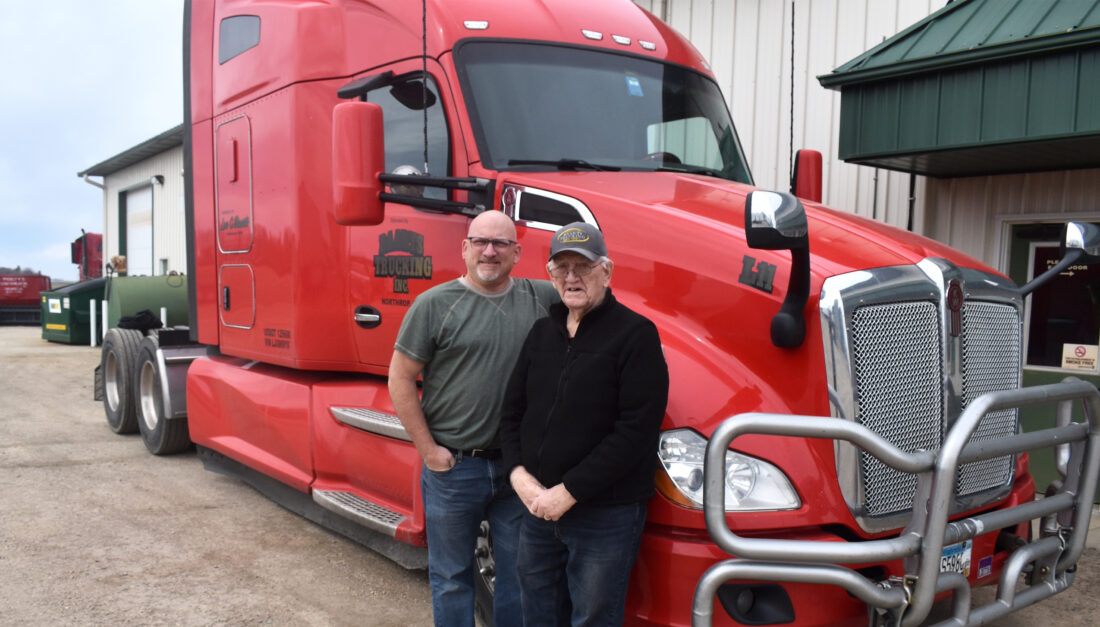
ABOVE: Lee Baarts and his father Larry Baarts of Baarts Trucking stand with one of the few trucks they don’t have out on assignment. With the spike in Diesel prices, Lee Baarts said it will cost Baarts Trucking around $42,000 extra a month.
TRUMAN – While fuel is always one of the highest and most necessary expenses for trucking companies, prices going from the $3.60 range to over $5 has begun to weigh on the minds and budgets of truckers and trucking companies.
Baarts Trucking has been around since the 1950s, after Larry Baarts came home from the Korean War. They started by hauling grain and frozen dinners for local plants and producers. Now they haul a variety of items, including canned chicken, nutritional products and components for Advanced Draining Systems.
Right now, they have 11 company trucks driven by company employees and 11 owner-operator trucks that are leased to Baarts from independent owners who work with Baarts to find deliveries. All 22 trucks use diesel, as they have since Baarts Trucking started.
On a monthly basis, Dispatcher Lee Baarts said their trucks will drive around 150,000 miles, burning through 24,591 gallons of diesel. Given the large quantity, any change affects expenses. This rise in diesel prices is no different.
“Our fuel bill for the month of February was $90,250,” Baarts said. “Fuel has been up $1.72 in the last month or so, give or take. With that increase and the same amount of miles we drive in March and April, that’ll be a $42,000 increase in fuel expense in one month.”
When this happens, Baarts said a surcharge is increased on freight, and the money goes directly back to the trucking company or the individual trucker if they are an independent contractor. With the way prices have been rising, the surcharge prices cannot keep up.
“The fuel surcharge goes up a lot slower than the price of fuel,” Baarts said. “That’s just how it works. We have a lot of good customers. Once [prices are] up there for a month or so, then we’ve got to start thinking about what’s best for our owner operators, because that’s their livelihood.”
More attention is also spent on capping dead head and planning fueling routes.
Dead head refers to miles spent driving and not hauling cargo. While in better times they can stretch and drive more to get hooked up for deliveries, now they may have to wait for a closer load so they can reduce gas wasted by driving with no cargo.
Each state has a fuel tax, and Baarts said drivers are taught to buy not by what the pump says, but by the pump prices minus the fuel tax. While the Midwest, including Minnesota, has better base gas prices than the coasts, often truckers will fill up in adjacent states like Illinois because it has a 73 cent fuel tax, while Minnesota’s is only at 32 cents.
While in most cases they have no choice but to react as these price changes happen to them, Baarts said his family has experienced enough to know what to do.
“My dad has been around when there was a shortage of diesel, and they could only give him 25 to 30 gallons back in the 70s and 80s during the energy crunch,” Baarts said. “This is just another day, another thing in his life that he’s witnessed. We just keep weathering the storm and keep moving on.”
While these expense increases undoubtedly sting, Baarts said there’s no way they’d close up shop because of these gas prices.
“Maybe the independent owner operators, because it’s their truck and they pay the bills,” he said. “They might call it; they might shut it down or quit for a while if things got out of hand on pricing and stuff. We’ve been through a lot, so I’m pretty sure we’ll keep hauling the freight if the customers keep paying the bill, because the world needs product.”
Local News
Reports cards bring points of pride, room for improvement
MARTIN COUNTY – The Minnesota Department of Education has released its report cards on public school districts, ...

Diesel hikes adding large expense for trucking companies

Welcome burn site open Saturday

America at 250: A journey through time, told through our communities

Widow of local Red Cross leader hosting blood drive in his honor