
Overseas conflicts influence hike in local gas prices
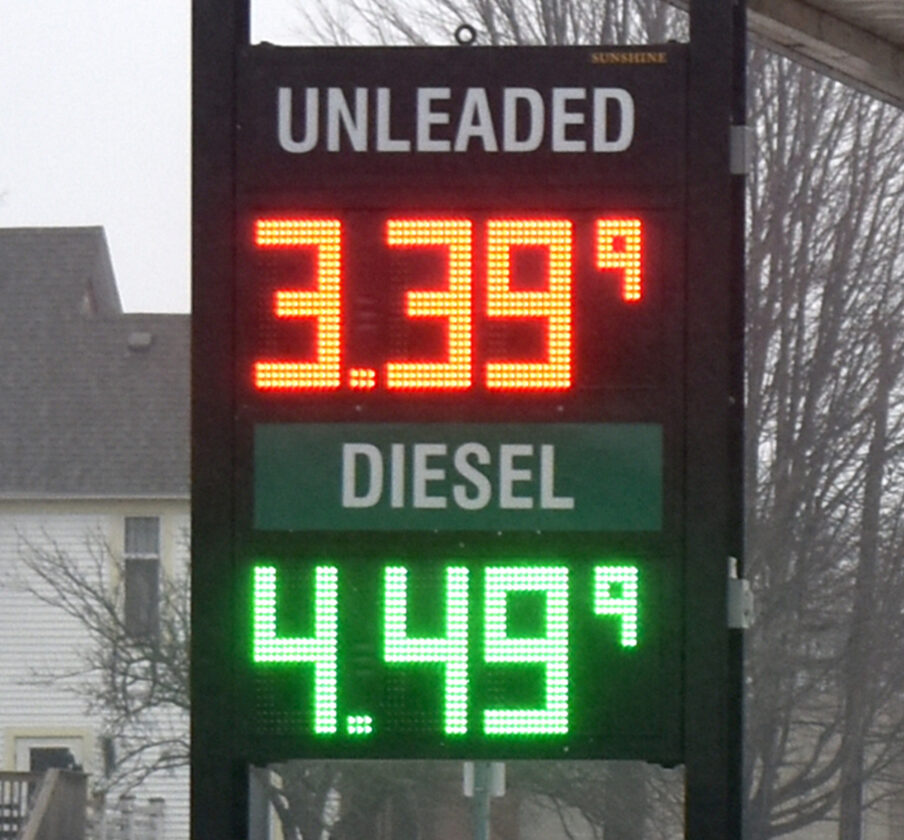
ABOVE: At multiple gas stations across Fairmont, gas jumped to $3.39 Friday as crude oil futures peaked at $92 a barrel.
FAIRMONT – In just the past week, gas prices have gone as high as $3.39 a gallon at some gas stations in Fairmont.
This is an over 20-cent increase from the $3.15-$3.17 range seen earlier in the week, when the Iran conflict was already underway. The average across Martin County is $3.26, eight cents higher than today’s Minnesota average, according to AAA’s gas price statistics. Just one month ago, the Minnesota average was $2.67, and a week ago it was $2.79.
According to the New York Mercantile Exchange, crude oil futures dropped to $60 a barrel during the month of February, after having gone as low as $56. Since February 26, the price has gone from $65 to a high of $92 today. For reference, the market on crude oil futures started today at $80. The last time futures were at $92 was August 26, 2022, when futures were climbing down from a peak of $118 during Russia’s invasion of Ukraine.
According to AAA’s gas price statistics as of Friday afternoon, while southern Minnesota is getting hit harder than northern Minnesota, Martin County is getting more of the brunt. Jackson, Watonwan and Faribault counties all have averages under $3.20, while Blue Earth is averaging $3.23.
While much higher than before, these prices are still much lower than Minnesota’s highest recorded average price of $4.75, which occurred on June 15, 2022, several months into Russia’s invasion of Ukraine.
Flint Hills Resources is a gasoline and diesel refinery that provides gasoline to gas stations across Minnesota, including Fairmont. Vice President of Public Affairs Jake Reint said a pipeline system brings crude oil in from pipelines when it can, but also utilizes oil tankers.
When it comes to the cost of gasoline, Reint said the number one factor is the cost of crude oil.
“The exact percentage can vary a bit, but it’s by far the largest variable in the cost of the fuels that we all buy at the pump,” he said. “That’s always first and foremost.”
This can be influenced by local incidents, such as pipeline or refinery issues. But more broadly, this can be impacted by global events.
“There’s a corresponding impact on the price we all see at the pump now when there’s turmoil in other countries, especially in the Middle East, which is obviously a very large source of crude oil for the world. Even though we’re not running any Middle Eastern crude in Minnesota, the effect of 20 percent of the world’s crude oil being impacted by the fact the Strait of Hormuz is currently not accessible affects global crude supplies, and therefore affects the price of the crude oil we also acquire.”
Even as prices rise higher, Reint said there’s no stopping the 1,000-employee facility churning out gasoline every day.
“It’s a continuous flow,” he said. “We’re not just buying one batch at a time and sitting on it for a month and then deciding what to do next. It’s a continuous flow. When the crude oil prices go up, we have to pay that price, and have to anticipate what it’s going to perhaps cost in the future.”
As the previous numbers showed, Reint confirmed that the last time he had seen an immediate increase similar to this was during Russia’s invasion of Ukraine.
“It’s certainly not unique to see a sharp response, from a market standpoint, to significant disruptions in their global supply for crude oil or shutdown of refining capacity,” he said.
Though these prices are less than ideal, Reint said Minnesota is lucky in its energy security position as the current geopolitical situation marches on.
“We’re very fortunate to have access to abundant crude supplies in places like North Dakota and Canada. That’s part of where we are as a region, geographically blessed again. It doesn’t mean that we won’t be affected by market factors elsewhere, but we have a very reliable supply of crude oil. That really helps buffer us from significant economic harm and/or physical loss of product that does happen elsewhere in the country and in the world when supplies are significantly affected.”
Local News
Potential rough fish limits draw local criticism
Daylight Saving Time tonight
CEYLON — A cribbage tournament will begin with registration at 1:15 p.m. today, March 7, at the Welcome Legion ...
Overseas conflicts influence hike in local gas prices

Chamber names top businesses

Arts groups announce shared leadership
Human services left in limbo amid funding freeze
FAIRMONT – With the Trump Administration looking to freeze nearly $260 million in Medicaid funding, and the state ...