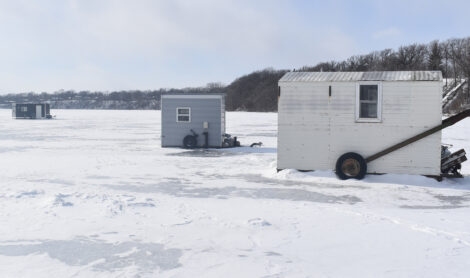
DNR eyes potential walleye bag limit change
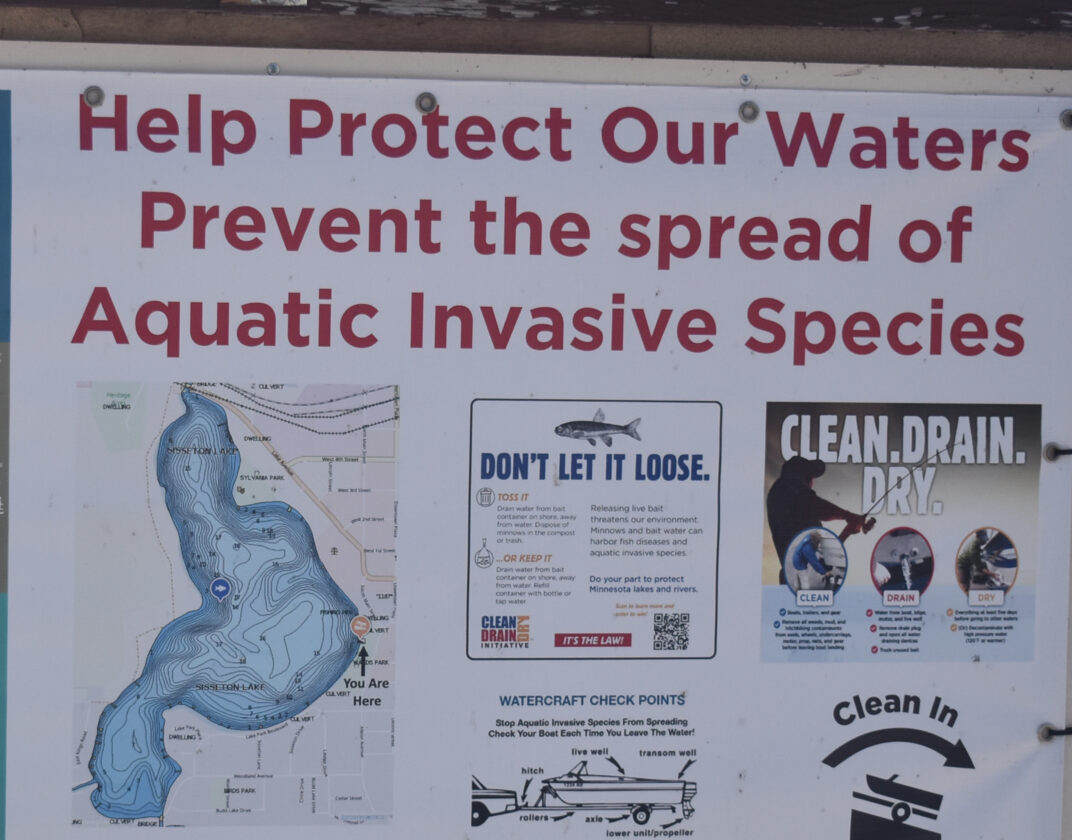
ABOVE: Invasive species, like those displayed here on a sign at Ward Park by Lake Sisseton in Fairmont, play a role in why the DNR is seeking to make the daily bag limit for walleye four, instead of the current six which it has been at since 1956.
FAIRMONT – The Minnesota Department of Natural Resources (DNR) is considering changing the daily bag limit for walleyes from six to four.
MN DNR Regional Fisheries Manager Brian Nerbonne said it has been at six since 1956, but recent discussions have debated whether six is still the right number.
“As you probably can guess, there’s a lot that’s changed since 1956 in angling,” he said. “We’re trying to be mindful of that as we think about what our statewide limit is for walleye.”
For what exactly has changed, Nerbonne pointed to three factors. The first is changing climate and warmer waters.
“They’re more of a cool water species,” he said. “Other species, like largemouth bass, that are more of a warm water species, are probably going to do better in the future. There’s a lot of scientific research that documents that pretty well. We’ve already seen some of those changes starting to happen in some Wisconsin lakes, where they’ve been documenting declines in natural reproduction of walleye.”
The second is invasive species like zebra mussels and spiny water flea.
“Those invasive species are active around the lowest parts of the food chain that are the base of what all life in the lakes depends on,” Nerbonne said. “Those invasive species are disrupting the food chains that would allow those lakes to feed walleye and have healthy populations there. We’ve got pretty good evidence that when those invasive species get into lakes, we see declines in walleye populations and reproduction as a result.”
Finally, new innovations in angling technology are giving DNR officials like Nerbonne concern.
“That’s not only the equipment anglers have on their boats that make them more effective at catching fish,” he said. “There’s a lot of new technology out there that makes anglers, if they know how to use it, really effective at finding and targeting fish, including walleye.”
It’s not just these innovations by themselves. Nerbonne said it’s just the next step in a long line of changes since the mid 50’s that have made it easier for anglers to snag walleye at higher rates.
Fox Lake Conservation Club Board of Directors Member Jim Miller said how this change affects anglers could depend on what type of angler is considered.
“The vast majority of anglers that are fishing for walleyes do not reach their six-fish limit,” he said. “What it amounts to is it’s more of a social and economic change. It’s going to affect more out-of-state anglers more than anything. The ones that are coming in on their annual trip. They’re staying at a resort or a lodge. They drove a long way. Now they can only catch four walleyes, or before they could catch six.”
Nerbonne said they have heard these concerns about affecting tourism for cities known for lakes, like Fairmont. However, he said the change would bring most lakes into line with what the most popular lakes require for walleye anyway.
“If you think about Leech Lake, Mille Lacs Lake, they already have a lower limit than six for their daily limit. It varies a lot between those different big lakes, but they’re all lower than six. Those are the lakes that are probably the most targeted by anglers traveling from great distances to fish. The reason people go there to fish isn’t that they can harvest six fish; it’s that the fishing is really good on those lakes. We really hope that that’s what’s driving anglers wanting to come and fish in Minnesota.”
On technology, Miller said devices like the forward-facing sonar, which can allow you to scan outward in the water and locate fish, have driven concerns about making fishing too easy, potentially devastating walleye populations. Miller hasn’t seen anything that would cause concern so far.
“You still have to have a competent angler to operate the thing,” he said. “You still have to make that fish bite. You do have the advantage, because now you know that fish is over in that direction.”
There is some skepticism about this potential change. Miller said there are some that don’t want more restrictions, and catch as much as they can.
The DNR is currently taking submissions and comments from Minnesotans voicing their opinions and information about this potential change. Nerbonne said in addition to tourism concerns, people have asked about what this change would directly address.
“I’ve heard from some people that say, ‘I want to see a problem where you definitely can show there’s a problem you’re going to have to solve with this regulation,'” he said. “We’re trying to do this in a proactive manner, where we aren’t going to wait to start to see problems with walleye fishing in Minnesota and then try to fix it with some sort of regulation change.”
In a survey done by the DNR, which had over 3,000 responses, Nerbonne said the most popular opinion was making the bag limit four walleye, while the least popular was keeping it at six. Regardless, he said what people say will be a big influence before they make their next move.
“We’ll look at those comments and respond to them,” Nerbonne said. “Think about what we hear and see in those comments, and whether that makes us want to think about making changes to the proposal. From there, we’ll make that decision on what we want to kind of move ahead with.”
The public comment period is open until March 5. Send any comments on the reduced walleye limit to fisheries.rulemaking.comments.dnr@state.mn.us. For questions about the walleye limit proposal itself, email brian.nerbonne@state.mn.us or call 651-259-5235.
Local News
DNR eyes potential walleye bag limit change
Ceylon Area Historical Society meeting Feb. 4
CEYLON — St. Paul's Lutheran Church in Wilbert is scheduled to have services at 10 a.m. on Sunday and an annual ...
Seasons set to close in Trimont
City to release first State of the Lakes report
FAIRMONT— In the year 2025 the city of Fairmont took some major steps in addressing issues and concerns with the ...

Local funeral home brings cremation to rural areas