Excess snow prompts school closures
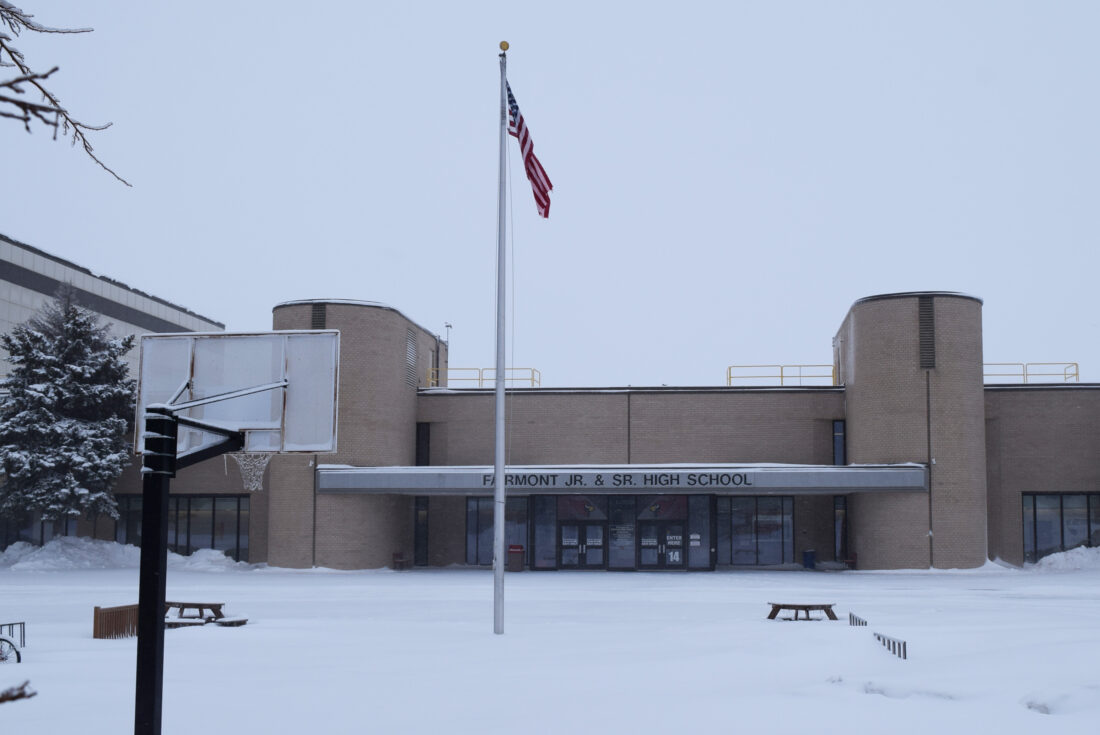
ABOVE: Outdoor equipment is buried in snow during a snow day on January 4 at Fairmont High School. The district has already canceled four days of classes due to snow.
FAIRMONT- As Martin County sees high levels of snowfall this winter, area schools have had to declare an above average number of snow days. Fairmont Area Schools has already canceled school four times due to inclement weather.
For Fairmont Superintendent Andy Traetow a potential snow day is an unexpected scenario.
“It’s a really unpredictable metric. The weather is something out of our control and we’re at the mercy of what happens and have to make educated decisions that ultimately keep our students and staff safe,” said Traetow.
While it’s impossible to plan very far in advance of an inclement weather event, the district typically begins its decision making process after examining mid-range forecasts and receiving notice from the National Weather Service (NWS) that a disruptive weather event is headed towards the area. Once this notification is given the NWS delivers predictions concerning temperatures, wind speeds, precipitation and other meteorological information in a multi-page report. After this initial report is delivered the NWS continues to give regular updates and calls to area districts.
Fairmont also consults with Minnesota Motor Bus, the private company which operates school buses in Fairmont, and typically conducts hourly phone calls to discuss road conditions. Similar lines of communication are maintained with the Martin County Road Supervisor neighboring school districts. Because districts in Martin County experience similar meteorological conditions they typically reach a joint consensus regarding closures due to weather events. Although Fairmont Area Schools has a more centralized student population compared to districts like Martin County West (MCW) or Granada Huntley East Chain (GHEC) enough of its students live outside the city to prevent its more urban status from making a significant impact on school closures.
“Continual communication amongst all those parties throughout the process really lead into the decision of whether or not to hold a school day. … They are extremely challenging decisions because of the impact they have on the school system but most importantly on our students and families. … Those decisions are taken very seriously with all factors considered,” said Traetow.
After these factors are considered the choice to declare a snow day ultimately lies with the superintendent. While Traetow said he has no quantitative procedure that leads to a decision, he places a high level of importance on the advice he receives.
“It’s not made in isolation, it’s definitely a collaborative effort to gain as much information as we have. Our goal everyday is to make sure all our students and staff members make it to school each day,” said Traetow.
Minnesota statute mandates a minimum amount of instruction districts must offer every school year. Fairmont’s current school calendar has enough days to account for five snow days without extending further into the summer. Once that limit has been reached the district has designated four more days at the end of the scheduled school year as snow make up days. If Fairmont exhausts all of those days the school board may extend the school year further unless the state chooses to make special accommodations and allow districts to go below the minimum hours of instruction for the current school year.
While other Martin County districts such as MCW or GHEC have created plans to implement e-learning days instead of a complete cancellation, Fairmont has yet to do so. In order for such a plan to be implemented it must be in compliance with state regulations in areas such as accessibility and families’ internet access. Additionally districts which implement such plans must notify families at the beginning of the school year.
“It’s something we’ll consider moving forward and not a concept that we’ve entertained,” said Traetow.
As of now the district is unable to introduce such a plan until next fall barring a change in policy from the state.
Local News

Coffee Hours/Coffee Lovers meetings continue

Garden Club continues to flourish in 65th year

With towing business, local man achieves dream
GHEC School Board mulls size change
GRANADA – At its meeting on Thursday, the Granada- Huntley-East Chain (GHEC) School Board mulled shrinking from ...

Welcome City Council to meet June 16