
STEP celebrates 60 years
Trending
FAIRMONT-- On Thursday STEP Inc. celebrated sixty years of operations. Its 60th anniversary was in 2020 but the celebration was delayed due to COVID-19.
Since its inception in 1960 the nonprofit has grown dramatically, expanding its services and improving its support for clients.
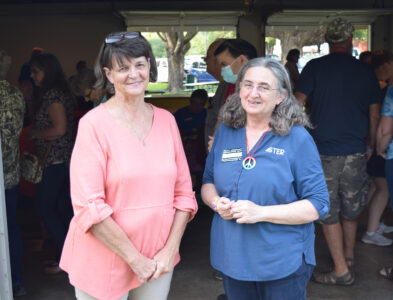
Sue Eisenmenger has been executive director of STEP since 1980. Lisa Fett originally started working with the organization in 1983 and now heads one of its Fairmont sites. Both of them took some time to reflect on their history with the organization and how it changed ahead of the anniversary celebrations.
"One of the reasons I'm still here --I mean I could have retired a while ago-- is there's so many things that are happening and I want to see where they go," said Fett.
Throughout the organization's history the services its been able to provide have been linked to and limited by the public perceptions of people with disabilities.
"I think one of the things the general population misses (concerning) people with disabilities, or any person who is different than you are, (is) how much you have to learn from them. My life has been changed because of the people I've gotten to know through my job. I think I'm a better person because of (them)," said Eisenmenger.
The organization which later became STEP was created in a time where there was little assistance available for people with disabilities. Many people were sent to the state's overcrowded and understaffed state hospital system. Those who could live with their families had very little if any opportunities for education or employment.
"During that time no one thought that people with disabilities could work. They didn't think they could go to school, they didn't think they could learn anything," said Eisenmenger.
In response to this lack of services a group of parents created a part-time program which offered education for children and adults. At the time of its inception it had no state support and relied almost entirely on private donations. In 1975 the organization began primarily serving preschool students and adults after a federal law mandating equal access to public education was passed.
During its early history the organization's education model was heavily influenced by what was taught in schools. It didn't operate year-round until 1977. During the 1970s a larger emphasis on employment began to form within the organization's adult group, but opportunities for employment were still very limited.
"In the early 70s some ideas started coming out; maybe if we teach people in a certain way, maybe they can learn to work. I don't think the people with disabilities changed but the perceptions of what they could do changed," said Eisenmenger.
The 1970s also marked the beginning of deinstitutionalization in Minnesota, and the closures of state hospitals led to a dramatic growth of community residential services in the following decades.
In the early 1980s a movement emerged advocating for employment for people with disabilities in integrated workplaces with adequate support services. At this time the organization opted to make real-world employment its primary focus. The organization began placing people in community jobs and assembling work crews around 1984, and also began to hire job coaches who could help clients enter the workplace.
STEP adopted its current name in 1987 and began operating multiple sites within Fairmont in the 1990s. STEP was one of the first organizations in the state to implement person-centered planning, an approach the organization continues to use today.
"It's basically looking at each person as an individual and designing services for that individual. Just because people are grouped together it doesn't mean they all want the same thing," said Eisenmenger.
Over the course of the 2000s and 2010s STEP continued expanding its operations and services. Today it serves over one hundred people across Martin and Faribault counties.