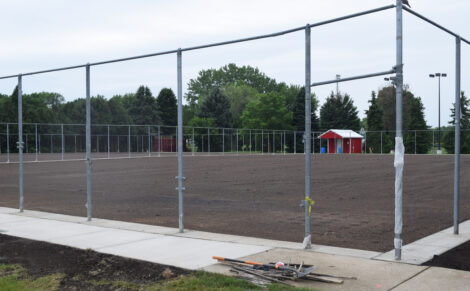
Relief money funds projects
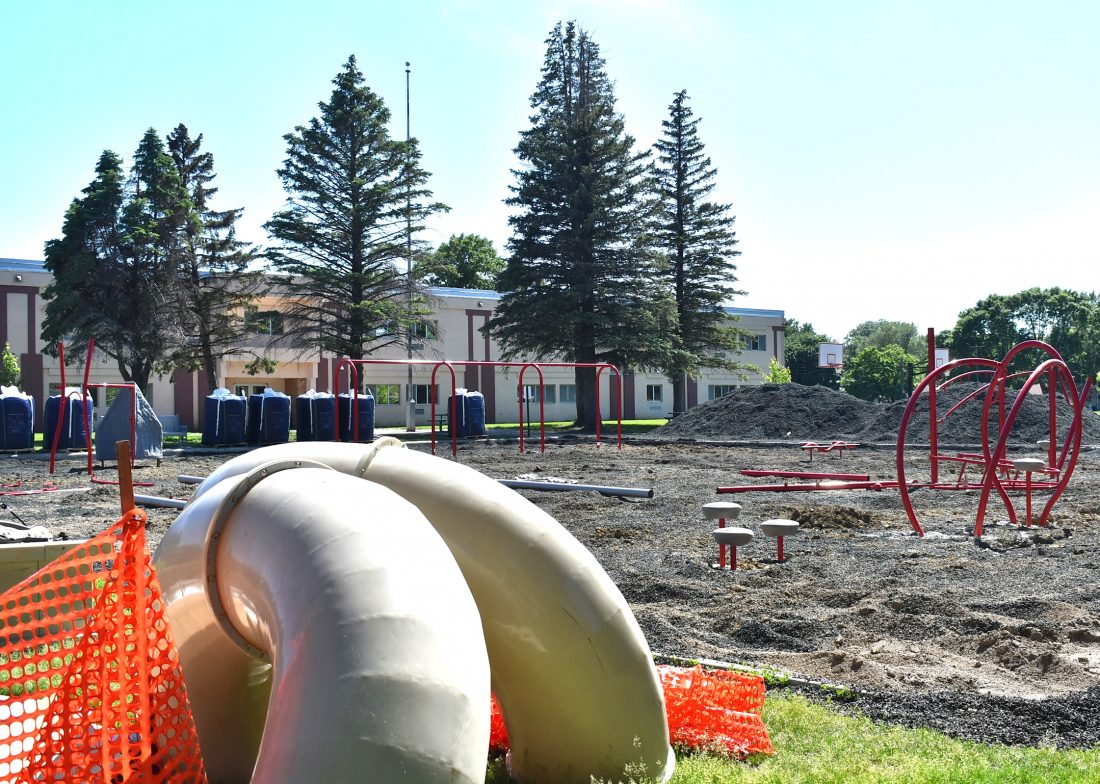
ABOVE: The Fairmont Area School District is working on several projects, including installing a new playground at the elementary school. Some of the old equipment can be seen in the foreground while some new pieces have already been installed.
FAIRMONT- This summer Fairmont Area Schools will be working on an array of infrastructure projects paid for with relief from the state’s Elementary and Secondary School Emergency Relief (ESSER) fund. The ESSER fund was created to distribute federal Covid-19 relief. The district plans to use a portion of these funds to replace the playground at Fairmont Elementary School, while Fairmont High School is planned to receive new common area furniture as well as a refurbished science classroom and fitness and weight room. In addition to replacing or refurbishing older school facilities these projects intend to create more effective learning spaces that can more easily implement physical distancing if it is required.
One upside of infrastructure projects is that their benefits can be maintained at a lower cost compared to other options.
Superintendent Andy Traetow said, “if you invest these one-time funds into programs and personnel, then we also have to develop a plan to sustain those programs and personnel beyond the existence of these funds. With these types of projects we’re using one-time funds on projects that will last beyond the foreseeable future which will allow us to focus on other spaces.”
ESSER funds are intended to allow districts to address the Covid-19 pandemic and state identified education priorities. The most recent round of ESSER funding is intended to help address less acute impacts of the pandemic, and with this wider scope comes a more detailed allocation process. After the district’s proposals were submitted it completed a feedback process with the state before receiving approval. The district is then required to fund and complete each project before relief funds are dispersed.
The replacement playground is approaching completion due to the necessary materials and workers becoming available ahead of the other projects. The previous playground predates the current elementary school building and was relocated from Budd School.
According to Tyler Garrison, the district’s Director of Building and Grounds, before the replacement process began the rubber coating protecting elements of its metal frame was beginning to deteriorate and severe metal corrosion was revealed during the disassembly process. While the district had originally planned to either refurbish the equipment and reinstall it elsewhere or donate it to a nonprofit, neither option proved viable given its condition.
The replacement equipment is intended to be more accessible to more students and is laid out in a way that allows segments to be used separately or combined into an obstacle course. In addition to being used during recess it can also be more easily incorporated into physical education.
Refurbishments to the high school fitness and weight room include new floors, paint and equipment, some of which dates back to the buildings completion. Once completed the facility will offer greater capacity and flexibility while providing a better resource for both student athletes and physical education. The current earth science classroom is also receiving new paint, flooring, cabinetry, and classroom furniture which will allow for more versatility.
Replacement furniture for the high school common areas has also been ordered; the vast majority of the current furniture has not been replaced since the school opened. The new furniture will feature school insignia and offer a wider range of seating arrangements such as traditional cafeteria tables as well as booths, high tables, and table sets.
Currently ESSER funds will continue to be distributed into September of 2024 and going forward the impacts of the Covid-19 pandemic will continue to influence school infrastructure. Part of the Minnesota Department of Education’s response to the pandemic involves addressing areas of need that have been identified during the pandemic. In addition to the playground and the weight room promoting more physical activity, all four of these projects allow students to be placed in smaller groups and spaced further apart to reduce risks of spread. While these projects are part of the response to the pandemic, their benefits will extend strictly beyond it.
“At this point it does seem like some (infrastructure investment) is responsive to what (settings) were in the past, but it also allows us greater flexibility moving forward should we see a need or our needs change,” says Traetow.
Local News
Coffee Hours/Coffee Lovers meetings continue
Garden Club continues to flourish in 65th year

With towing business, local man achieves dream
GHEC School Board mulls size change
GRANADA – At its meeting on Thursday, the Granada- Huntley-East Chain (GHEC) School Board mulled shrinking from ...
Welcome City Council to meet June 16